

Before Day 1: close the easiest loopholes
Choose your rules before the first strong urge. Archive the chat, mute or unfollow accounts, remove photo widgets, and decide how practical matters will be handled. Tell one trusted person what you are doing so you have somewhere to take the urge.
Write a short reasons list while your memory is balanced. Include what hurt, what stayed unresolved, and what continued contact costs you emotionally.
Days 1–7: emotional first aid
The first week is about reducing friction and getting through one wave at a time. Keep expectations basic: sleep, food, movement, work essentials, and connection with safe people.
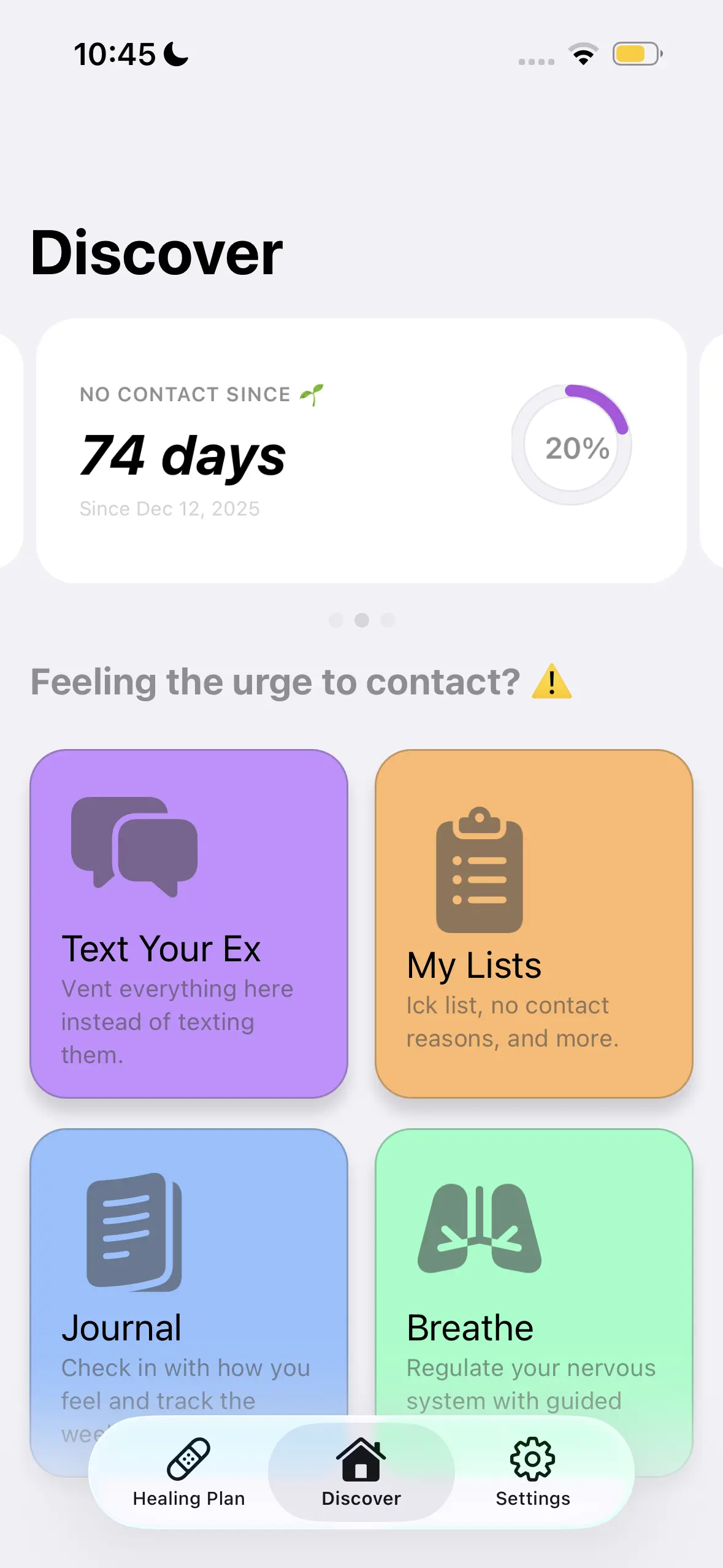
- Track the streak, but check it once rather than all day.
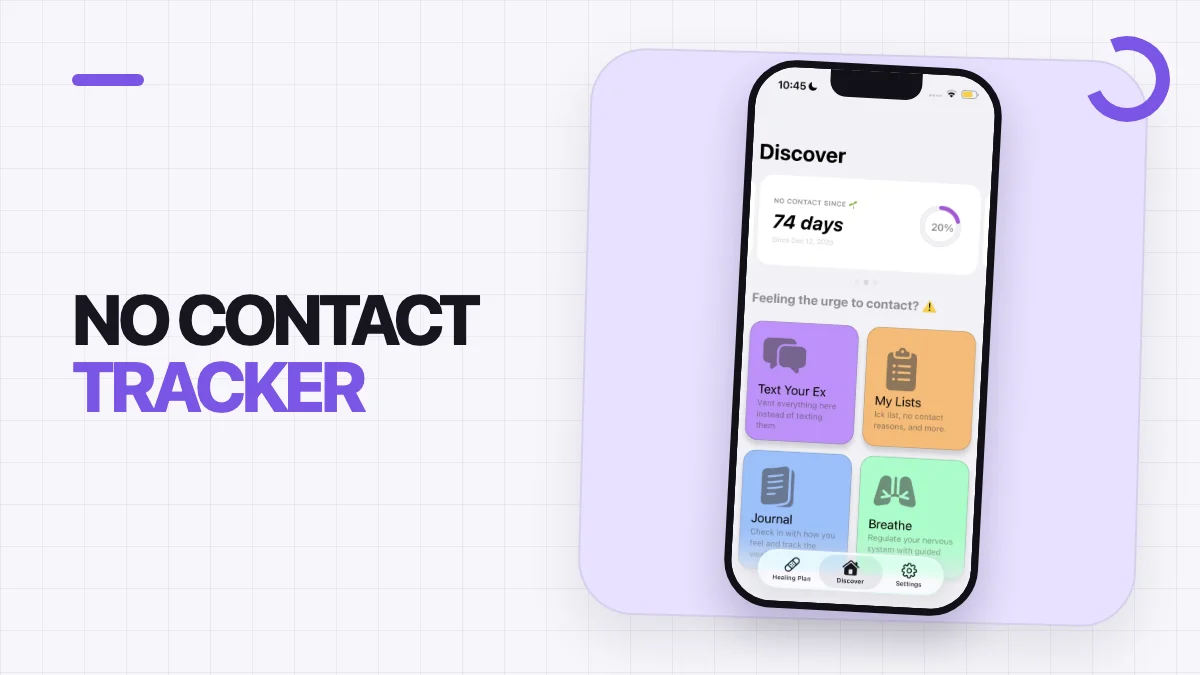
- Put unsent messages in a private journal or Ghost Chat.
- Use a ten-minute delay before any decision involving your ex.
- Avoid major conclusions while you are highly activated.
- Create a simple late-night plan before late night arrives.
Days 8–14: notice the pattern behind the urge
By the second week, triggers often become easier to name. Pay attention to the moment before the urge: boredom, rejection, alcohol, a familiar place, a mutual friend, an anniversary, or seeing someone who resembles your ex.
Journal about the pattern rather than replaying the entire relationship. Ask: “What feeling am I trying to change by contacting them?” Then choose an action that addresses that feeling more directly.
Days 15–21: practice mental detachment
Emotional distance does not mean pretending you never cared. It means letting the relationship stop organizing every part of your day.
- Return one part of your routine to yourself.
- Stop collecting updates that you cannot use constructively.
- Balance idealized memories with the full reality of the relationship.
- Make plans that do not depend on a future conversation.
Days 22–30: build what comes next
The final week is not a finish line. It is a review point. Look at what has changed in your sleep, concentration, triggers, self-talk, and ability to tolerate uncertainty.
Decide whether continued no contact, limited contact, or another boundary best supports you. Do not end the boundary merely because the calendar reached 30. Use what you learned.
Frequently asked questions
Does the 30-day no contact rule make an ex come back?
There is no guarantee, and that should not be the goal of the plan. Use the 30 days to create clarity and stability that do not depend on your ex’s response.
Do I restart at Day 1 after one message?
You can reset the tracker for accuracy, but avoid treating the reset as punishment. Review why the contact happened and strengthen the plan for that trigger.
Can I do no contact while co-parenting?
Usually you will need limited contact instead. Keep communication practical, child-focused, written where appropriate, and separate from relationship processing.