
What to do in the first days after a breakup
Do not demand a complete life plan from yourself while the loss is fresh. Reduce the next day to basic care and practical decisions. Eat something simple, drink water, sleep where you feel safe, and tell one person what happened.
Delay irreversible decisions when possible. You can archive photos before deleting them, mute before posting, and write a message without sending it. Creating a pause is often more realistic than asking yourself to feel calm.
Create enough distance for your mind to settle
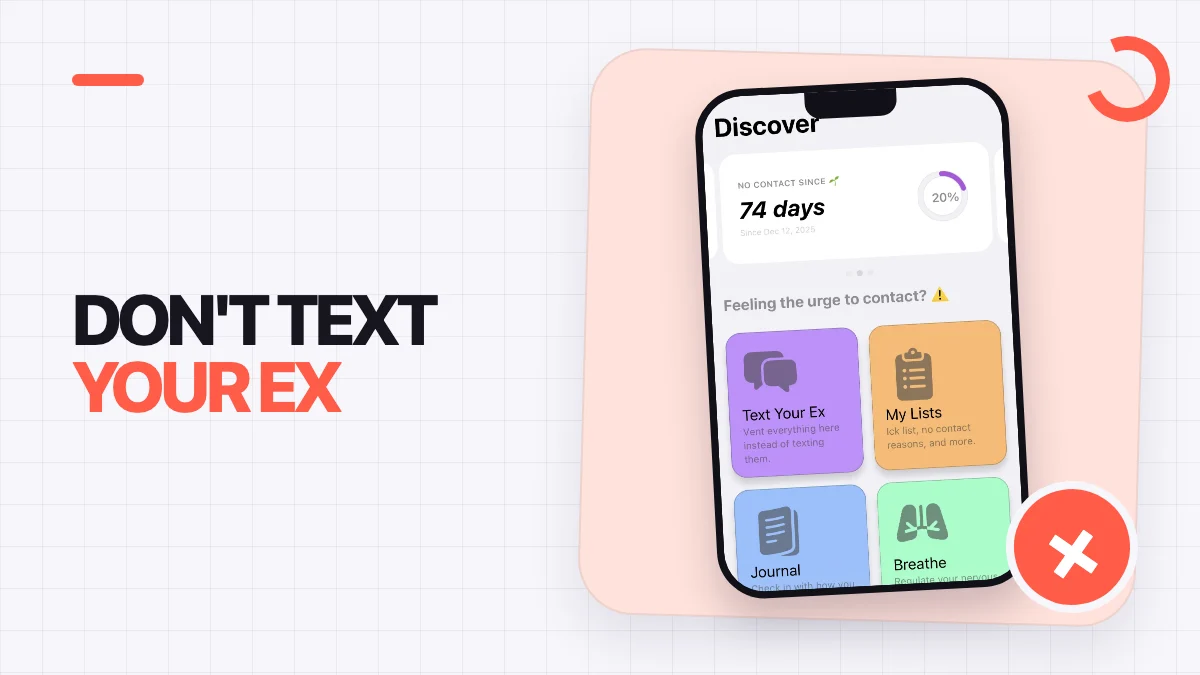
Continued exposure can keep the breakup feeling new. If every message, profile view, or update causes a fresh spiral, consider a no contact or limited-contact boundary.
Distance is not proof that the relationship meant nothing. It is a practical way to reduce new emotional input while you process what is already there.
Process the breakup without living inside it
Give the breakup a container. Talk to a trusted friend, journal for a defined amount of time, or work with a therapist. Then return to another part of your day.
If reflection becomes the same unanswered question for hours, change the prompt. Instead of “Why was I not enough?” ask “What did this relationship teach me about my needs, boundaries, and warning signs?”
For broader clinical guidance on coping after a breakup, see the practical overview from Cleveland Clinic.
Rebuild identity through small, repeated choices
- Restore one routine that disappeared during the relationship.
- Spend time with someone who knows you outside the breakup.
- Move your body in a way that is accessible, not punishing.
- Make one plan for the near future that belongs only to you.
- Notice what feels slightly easier rather than waiting to feel completely healed.
Recovery rarely moves in a straight line. A difficult day after a better week does not mean you are back at the beginning.
Know when self-help is not enough
Reach out for professional help if you cannot function, feel persistently hopeless, rely on substances to cope, fear your ex, or think about harming yourself or someone else. Contact local emergency services or a crisis resource immediately if there is urgent danger.
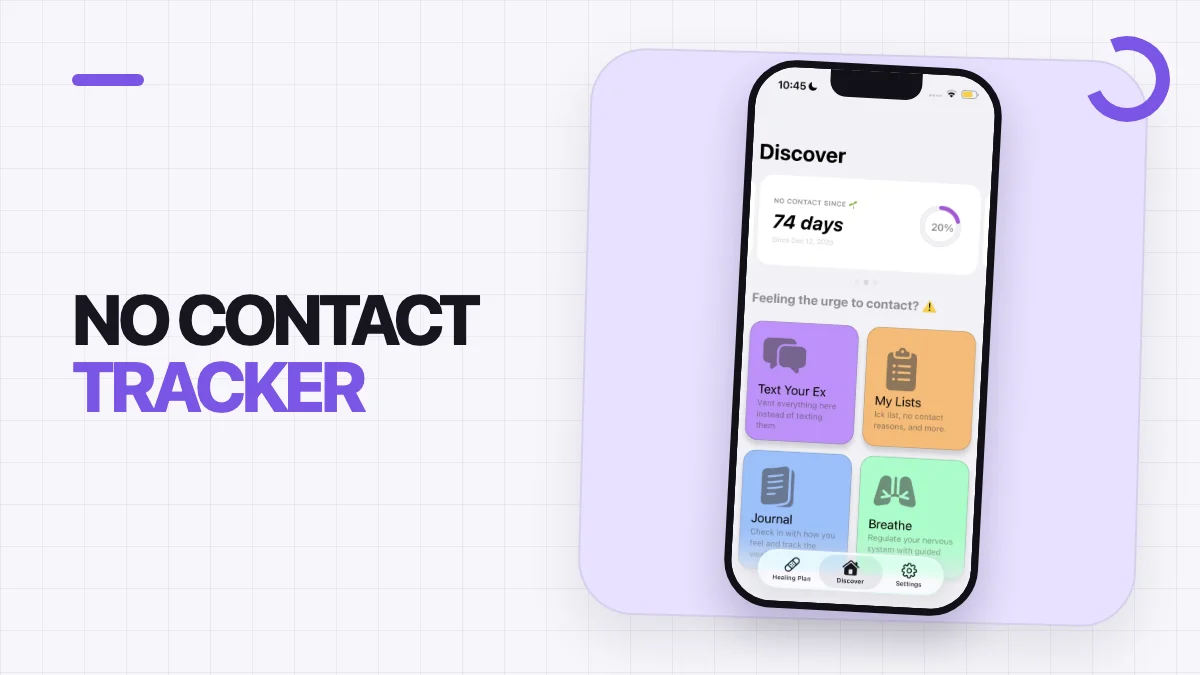
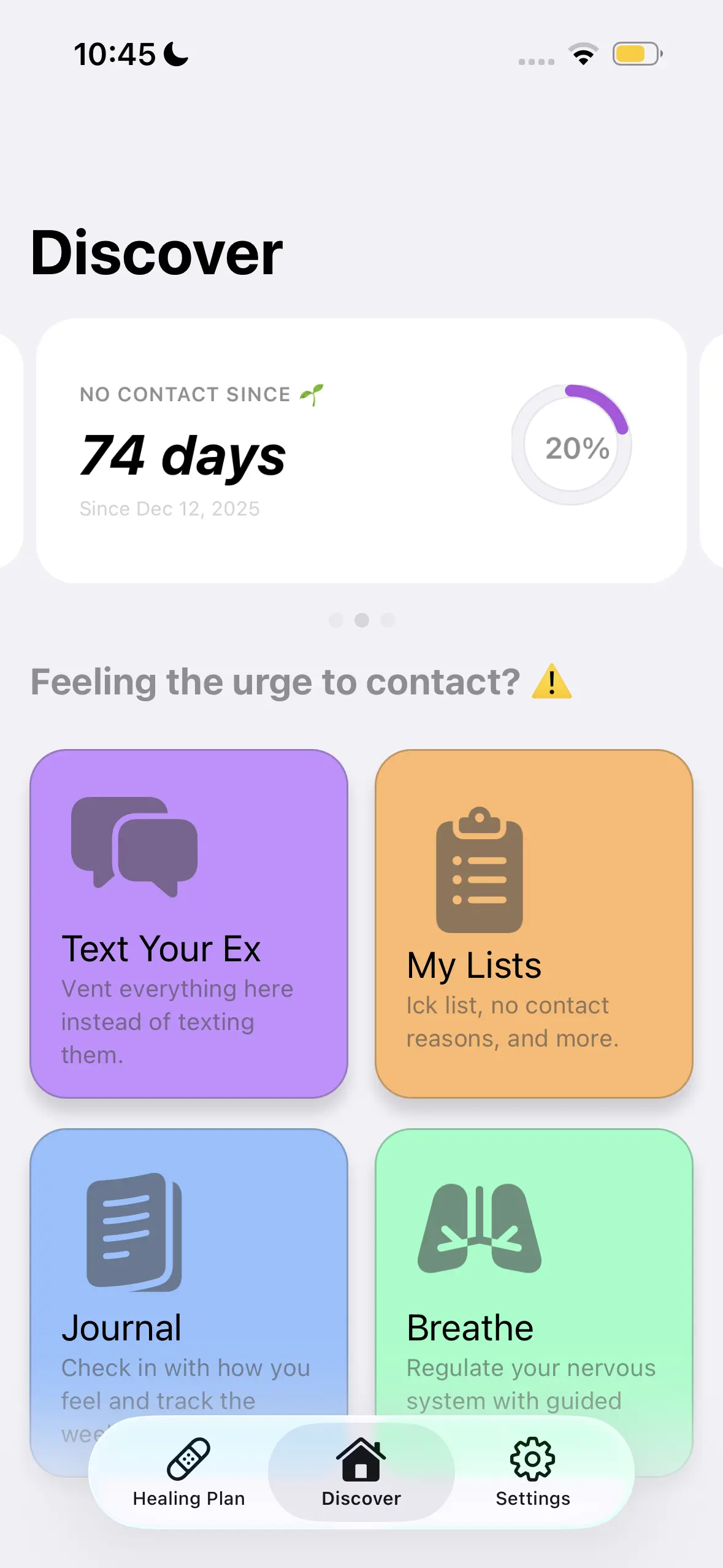
Start No Contact is a self-help tool. It can support routines and reflection, but it is not therapy or crisis care.
Frequently asked questions
How long does it take to get over a breakup?
There is no reliable universal timeline. The relationship, circumstances, attachment, support, and ongoing contact all matter. Look for gradual changes in daily functioning rather than a single date when you should be “over it.”
Why do I still miss someone who hurt me?
Missing attachment, familiarity, hope, or a shared future does not mean the relationship was healthy or should resume. Feelings and decisions can move at different speeds.
Will no contact help me move on?
It can help when continued messages or updates repeatedly restart distress. It is most useful when combined with support, reflection, and rebuilding your own routines.