
What does the no contact rule actually mean?
No contact is a practical boundary. You decide that, for a defined period, you will not initiate or invite non-essential communication with your ex. The purpose is to give your nervous system and daily routines room to settle.
It also includes the quieter forms of contact that keep the attachment loop active: checking stories, asking mutual friends for updates, rereading old messages, monitoring likes, or posting with the hope that your ex will notice.
No contact is not silent treatment
Silent treatment is often used inside an active relationship to punish, pressure, or avoid a conversation. A no contact boundary follows a breakup or clear separation and focuses on your own access and behavior. If a boundary message is safe and appropriate, keep it short: “I need space to heal, so I will not be in contact for now. I will reach out if anything practical needs to be resolved.”
When can no contact help after a breakup?
Distance may help when every conversation restarts hope, conflict, bargaining, or emotional pain. It can also help when you keep using contact to get a few minutes of relief and then feel worse afterward.
- You repeatedly text for reassurance or closure.
- You feel pulled into an on-and-off relationship cycle.
- Social media checking changes your mood for the rest of the day.
- You cannot tell what you want while your ex still has constant access to you.
- You need space to rebuild sleep, routines, friendships, and self-trust.
No contact is not the right answer for every situation. Co-parenting, shared housing, legal matters, work, finances, or safety concerns may require carefully limited communication instead.
How to start no contact without leaving loopholes
- Choose the boundary. Decide what counts as contact for your situation.
- Handle practical loose ends. Agree on one channel for necessary logistics if you need one.
- Reduce easy access. Mute, unfollow, archive, block, or remove shortcuts based on what keeps pulling you back.
- Plan for the urge. Write down who you will contact, where you will put an unsent message, and what you will do for the first ten minutes.
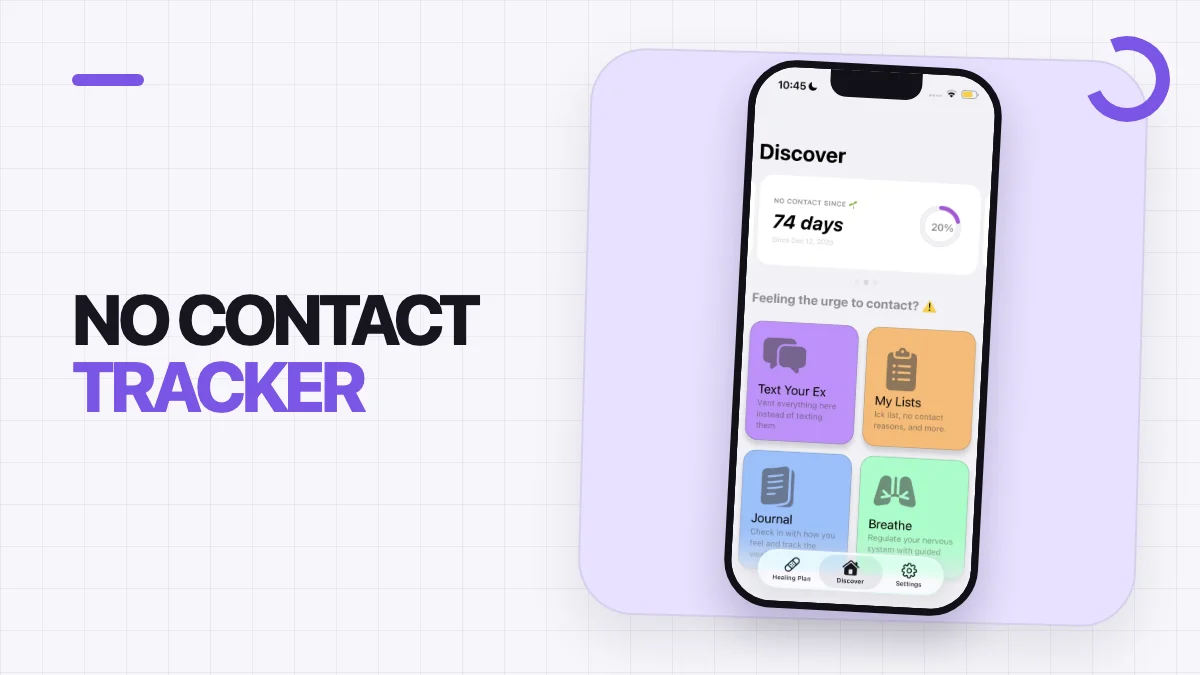
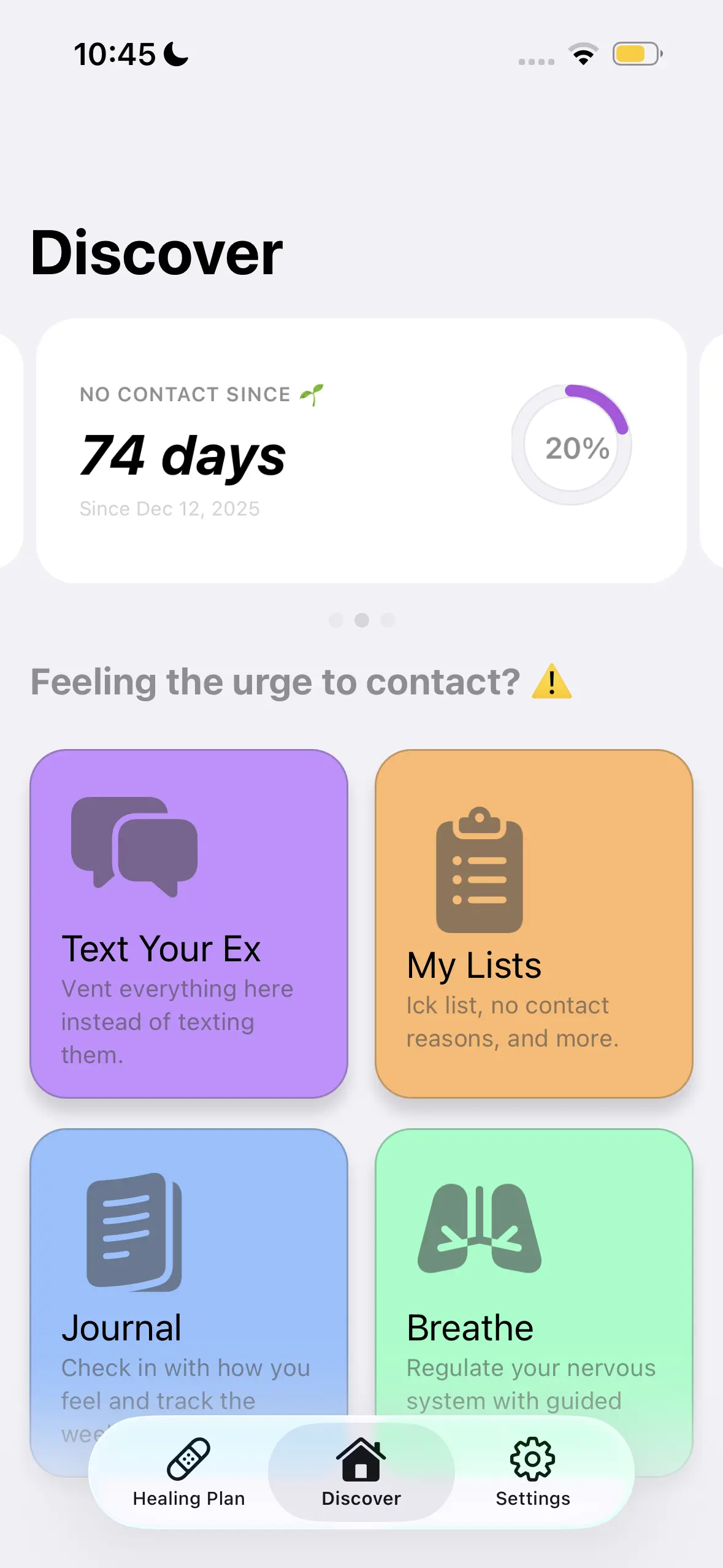
- Track your choice. A no contact tracker makes progress visible when your feelings make it hard to remember how far you have come.
Use no contact to regain your footing — not to calculate when your ex will miss you or come back. Your recovery cannot depend on their reaction.
Safety, co-parenting, and limited-contact exceptions
If you share children, work, property, pets, finances, or legal obligations, full no contact may be unrealistic. Create a low-contact structure instead: one written channel, practical topics only, neutral wording, and defined response windows.
If you are worried about stalking, threats, coercion, violence, or retaliation, do not rely on a generic breakup plan. Contact a trusted person, local specialist service, lawyer, or emergency service appropriate to your situation. Digital boundaries should never replace a real safety plan.
What if you break no contact?
One message does not erase every day before it. Treat the contact as information: What happened just before the urge? What feeling were you trying to change? Which loophole made reaching out easy?
Reset the counter if that is useful, but do not turn the reset into punishment. Update your plan, remove the easiest trigger, and begin again from a more informed place.
Frequently asked questions
How long should no contact last?
There is no universal number. Some people choose 30 days as a practical starting structure, while others need an open-ended boundary. Choose a period that supports recovery and review it based on your wellbeing, not your ex’s reaction.
Should I tell my ex before starting no contact?
If it is safe and there are open expectations, a brief boundary message can reduce confusion. You do not need a long debate or permission. In unsafe situations, get specialist advice before announcing or changing contact.
Does viewing their social media break no contact?
It may not be direct communication, but it can keep you emotionally engaged. If checking their profile reliably destabilizes you, include it in your no contact boundary.